
Expensas, gastos comunes, cuota de administración: one fee, many names
Updated
It is the same concept everywhere: each owner pays a monthly share of what it costs to keep the building standing. And yet almost nobody managing in two countries uses the same word for it.
This is a map of the vocabulary — for managers working across more than one market, for vendors selling to them, and for anyone who has found a search returning nothing because they were using another country's word.
What the fee is called, by country
The most widespread terms are «expensas» in the River Plate region and «gastos comunes» in Chile, but the list runs longer.
| Country | Name of the fee | Note |
|---|---|---|
| Argentina and Uruguay | Expensas | Split between ordinarias (the month's running costs) and extraordinarias (a one-off project apportioned separately). |
| Chile | Gastos comunes | Same ordinary/extraordinary split. |
| Colombia | Cuota de administración | The accumulated arrears are called cartera. |
| Mexico | Cuota de mantenimiento | Sometimes cuota condominal. |
| Peru | Cuota de mantenimiento | — |
| Ecuador | Alícuota | Strictly each unit's participation coefficient, but in everyday use it also names the fee. |
What the building and its manager are called
The same divergence shows up a level higher, in how the property and its administration are named. This matters more than it looks: it is the vocabulary a manager searches in, and the one a vendor has to speak.
| Country | The property | The manager | Governing body |
|---|---|---|---|
| Argentina | Consorcio | Administrador de consorcios | Consejo de propietarios |
| Uruguay | Consorcio or copropiedad | Administrador de propiedad horizontal | Comisión administradora |
| Chile | Condominio | Administrador de condominios | Comité de administración |
| Colombia | Propiedad horizontal | Administrador | Consejo de administración · asamblea de copropietarios |
| Mexico | Condominio | Administrador de condominio | Asamblea |
| Peru | Condominio | Administrador de condominio | Junta de propietarios |
What differs beyond the name
Vocabulary is the visible part, but three practical differences affect daily operations more than the label does.
How the fee is split. In some cases it is apportioned by each unit's coefficient of co-ownership — its percentage of the whole, normally fixed in the bylaws and tied to floor area — while in others some components are divided equally regardless of unit size. Two identical buildings can bill differently depending on what their bylaws say.
Who owes the debt. In several markets arrears attach to the unit rather than the person, so a buyer can inherit the seller's outstanding balance. It is one reason a debt certificate is such a routine step in a sale.
How formal the owners' meeting has to be. Notice, quorum and minute-taking requirements vary considerably, and with them how much of the manager's year goes into the meeting cycle.
Why this makes multi-country management harder
A manager operating in a single market needs none of this: they use their country's word and move on. The problem appears when a portfolio crosses a border, or when the software they bought is written in somebody else's vocabulary.
A system that only says «expensas» feels foreign to a Chilean manager, and one that only says «HOA fees» feels foreign to all of them. This is not an aesthetic point: if a resident gets a notice calling their fee something they do not recognise, they ask about it, and the manager is the one who answers.
How Eloria handles it
Eloria talks to residents in their country's language and vocabulary rather than a literal translation. A resident in Santiago hears gastos comunes, one in Buenos Aires expensas, one in Bogotá the cuota de administración.
The practical effect for the manager is not having to correct the tool in front of the client, or explain to an owner what the system meant.
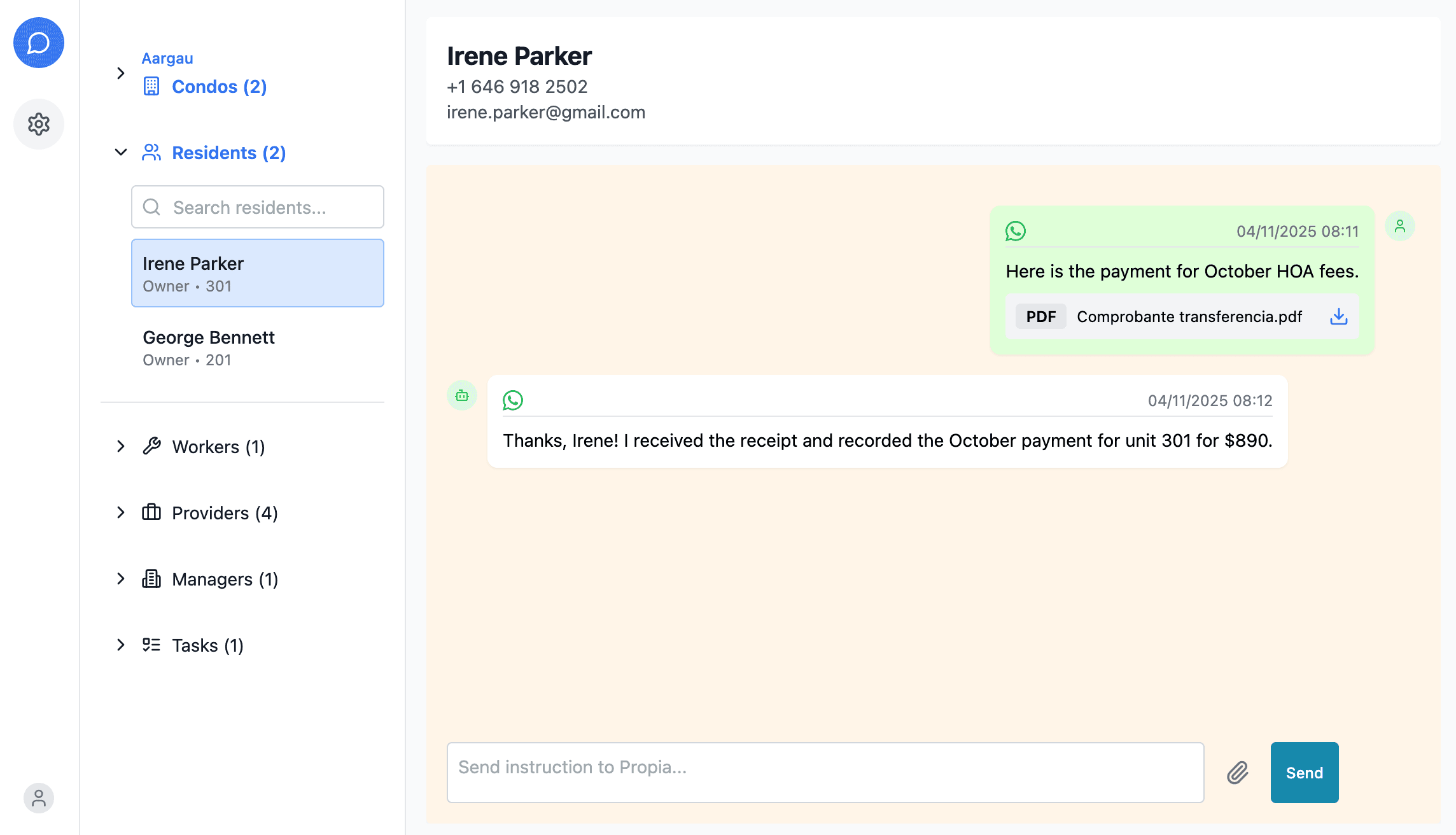
Managing across more than one country and want to see how the vocabulary adapts? Message us on WhatsApp and we will show you with one of your buildings.
Message us on WhatsAppKeep reading
- Building management in Peru
How a Peruvian building or condominio is run: what the junta de propietarios decides, what the administrador does, how cuotas de mantenimiento are billed, and what the practical challenges are.
- Condo Management in Argentina Guide
Complete guide to Argentine consorcio management: asamblea, administrador and consejo de propietarios roles, expensas billing, and arrears collection under current law.
- Property management in Colombia
How a Colombian conjunto or edificio is run under Ley 675 de 2001: why the property itself is a legal entity, what the asamblea, the consejo de administración and the administrador each do, how the cuota de administración is billed, and how arrears are collected.
- Guide to Building Management in Chile
Everything about building management in Chile under Ley 21.442: gastos comunes, assemblies, national administrator registry, and how to organize communication with owners.
- Guide to Condo Management in Mexico
Learn how to manage condominios in Mexico: legal structure, cuotas de mantenimiento, asambleas, and how to keep records of everything happening in your building. Updated 2026.
- Property management software: what to look for before you choose
A practical guide for condo and building managers: what property management software actually solves, what to ask in the demo, and why resident communication is usually the piece left out.
- The building's WhatsApp group: why it gets out of hand and what to do
Why the building WhatsApp group becomes ungovernable, what the usual alternatives are and why they fail, and how to bring order to resident communication without taking away the channel they already use.